ISO 22301 Certification
About ISO 22301 Certification
ISO 22301 Certification – Keep Critical Operations Running When Things Go Wrong
Table of Contents
It’s a Tuesday. The data centre your billing system runs on has an outage, and the vendor says “a few hours.” A few hours of what, exactly, for you? Missed invoices? Angry customers? A penalty clause you forgot was in the contract?
Business continuity is the boring-sounding discipline that answers those questions before the outage, not during it. ISO 22301 certification is the proof that you did the work. We train your people and audit your system for ISO 22301 certification. (We don’t write your plans. More on that below.)
ISO 22301 certification is not just backups
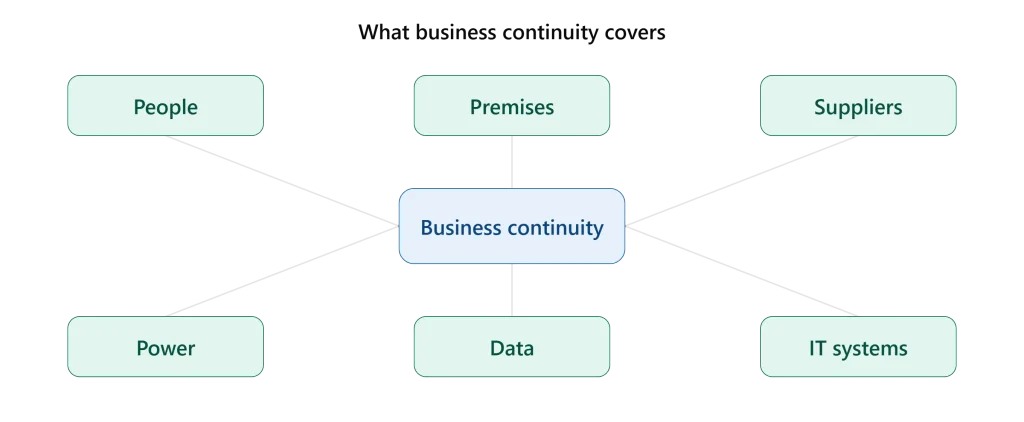
Backups are the first thing people think of when they hear continuity. They matter, sure. But the standard asks bigger questions about people, buildings, suppliers, power, data, all together. Which of your activities can’t wait, and how long can each one actually stay down?
An auditor will go looking for a few specific things. Start with the business impact analysis: a ranked list of what hurts most when it stops. Then a risk assessment, meaning what could realistically stop it (flood, fire, ransomware, a supplier going bust, a strike). Recovery targets come next, like “invoicing back within four hours.” Then plans a tired person can follow, an incident team with names against roles, and a list of the outside parties you depend on. Last, and this is where most people come unstuck, proof that you’ve practised. A plan nobody has tried is a guess.
Why bother with ISO 22301 certification
Often a client makes you. Banks, NBFCs, insurers, IT and BPO companies, telecom operators and hospitals get asked about continuity in vendor forms, and “we have a plan” doesn’t satisfy anyone anymore. ISO 22301 certification gives an independent answer.
Then there’s speed. Teams that have talked through a disaster once react quicker when one happens. That’s a quiet benefit of ISO 22301 certification: the rehearsal changes behaviour long before any certificate arrives. People stop saying “someone will sort it out” because they’ve already agreed who that someone is.
And the analysis itself surprises people. You find the one supplier, the one server, the one very busy person holding half the company together. Better to learn that now.
Is ISO 22301 certification for you?
If a day’s outage would cost real money or real goodwill, probably. Think financial services, data centres, cloud and managed service providers, hospitals, logistics, manufacturers feeding just-in-time lines, and public services. A contract with uptime penalties is a strong sign. Smaller firms qualify for ISO 22301 certification too, by the way: a 40-person payroll company can have a service nobody can live without, and a short, tested plan fits it better than a fat manual.
How the ISO 22301 certification process works
We cover training and audit. In this order:
- Enquiry and scoping. Which services, sites and teams are in scope, and what you’re after.
- Auditor and team training. Your people learn the standard and how a continuity audit runs: impact analysis, recovery objectives, exercises. Examples come from real disruptions, not only clause text.
- Mock audit. A dry run with the questions an auditor will ask, while there’s still time to fix things.
- Certification audit. Two stages: documents first, then an on-site look at how it works in practice, including evidence of exercises.
- Certificate and ongoing support. When findings are closed, you get the certificate. We stay on for yearly surveillance audits and recertification.
What counts as an exercise
A full disaster drill isn’t required, which is a relief to most operations managers. A tabletop (everyone round a table, walking through a scenario) is accepted for plenty of cases. What auditors want is the record: the scenario, who came, what went wrong, what you changed afterwards. No follow-up actions? That’s a meeting, not a test. Most teams aiming at ISO 22301 certification run one tabletop and one technical recovery test before the certification audit.
Things auditors find before ISO 22301 certification
Impact analyses done once, years ago. Recovery targets nobody has ever tested. Contact lists where half the numbers are dead. Exercises that happened but weren’t written up. “Critical” suppliers with no plan B. And a signed policy from top management who’ve never attended an exercise.
Quick experiment, if you’re considering ISO 22301 certification: pick one important service (invoicing, say, or customer support) and run it for half a day without the main office or main system. Watch what breaks first. That’s your starting list.
What you actually get from ISO 22301 certification
Customer confidence, obviously. Shorter outages. Clearer roles. Fewer panicked decisions, and an honest map of your risky dependencies. A year or two on, you’d hope to have a plan people have used, which is the lasting return on ISO 22301 certification.
Why ISPL
We’re an EGAC-accredited certification body with years of ISO training and audit behind us. For ISO 22301 certification we offer training for auditors and staff, mock audits, independent certification audits, and support through surveillance and renewal.
Getting started with ISO 22301 certification
How long it takes depends on what you already have. A company with an impact analysis, written plans and a recent exercise can move fast. Starting from zero? You’ll need time to build and test first. Certificates last three years, with surveillance audits in between, and recertification at the end of the cycle.
Want to know what ISO 22301 certification would involve for you? Send us your services, sites and team size, and we’ll sketch a training and audit plan.
Contact us
Phone: +91-9990477631 Email: info@isplcmmi.com
Get Expert Guidance
Fill out the form and our experts will get in touch with you.
Explore Other ISO Standards
ISO 9001Quality Management System ISO 14001
Environmental Management System ISO 45001
Occupational Health & Safety Management ISO 27001
Information Security Management ISO 22000
Food Safety Management System ISO 50001
Energy Management System ISO 17025
Laboratory Management System ISO 13485
Medical Devices Quality Management IATF 16949
Automotive Quality Management ISO 22301
Business Continuity Management
Need Help Choosing?
Talk to our ISO consultants directly — happy to guide you to the right standard for your business.
☎ +91 - 9990477631 ✉ info@isplcert.com