ISO 45001 Certification
About ISO 45001 Certification
Improve your workplace by implementing a single ISO standard.Improve your workplace with ISO 45001 Certification, One Standard at a time.
Table of Contents
There is probably some kind of a safety policy in place in most workplaces already, whether it is a paper document or a computer-generated one. The question is if anyone follows it, if it would slow the day down in case of a problem. This is what ISO 45001 certification is all about. It provides you with a structured Occupational Health and Safety Management System that is designed to reduce real risk, not just show it, and it’s the component that makes a safety policy a reality.
At ISPL we assist in the preparation of teams and the safety systems for ISO 45001 certification; so the outcome is not a team of people that have put together what they think they need to have the week before the auditor arrives, but a team of people who have been trained.
What is ISO 45001 Certification?What does ISO 45001 Certification Actually Mean?
The ISO 45001 standard for health and safety at work is the international standard used to build ISO 45001 and is effective in any industry, for large manufacturing sites or small workshops. There is no such thing as avoiding accidents on paper. It’s about effectively reducing the risk of injury and illness, not the process that is stored in a folder for the next audit but the process that people actually perform.
Typically, companies that engage in ISO 45001 certification end up concentrating on a few items: identifying hazards unique to their working environments, reducing incidents and occupational illnesses, complying with any applicable safety-related legislation, defining measurable targets (as opposed to general safety slogans) and involving employees in safety decisions (rather than providing a form to sign).
Why It’s Worth Pursuing
Businesses have a number of tangible motivations to pursue ISO 45001 certification.
For one, there are fewer incidents — ISO 45001 certification is a push to identify hazards early. Prevention is better than cure. There’s also an economic component: Fewer injuries generally lead to lower compensation expenses and less disruption when an employee is unable to work. Good reputation is also important. Clients are putting more trust in companies that have been properly audited and know how to be safe, and a statement on a website is not enough. Legal compliance is done to remain ahead of issues, rather than playing catch up.
Who Should Consider ISO 45001 Certification
Organizations that are looking to reduce injuries at work, require their workplace to meet a client’s safety standards before even bidding on a contract, want to save on incident-related expenses, or wish to establish a reputation as a safe place to work may be good candidates for ISO 45001 certification. It is also worth considering if your business has expanded rapidly as the informal approach to safety that was effective in the early days of your business simply doesn’t scale up to accommodate more people and more complexity.
Understand the steps involved in the ISO 4501 Certification Process.Learn the procedure for the ISO 4501 Certification Process.
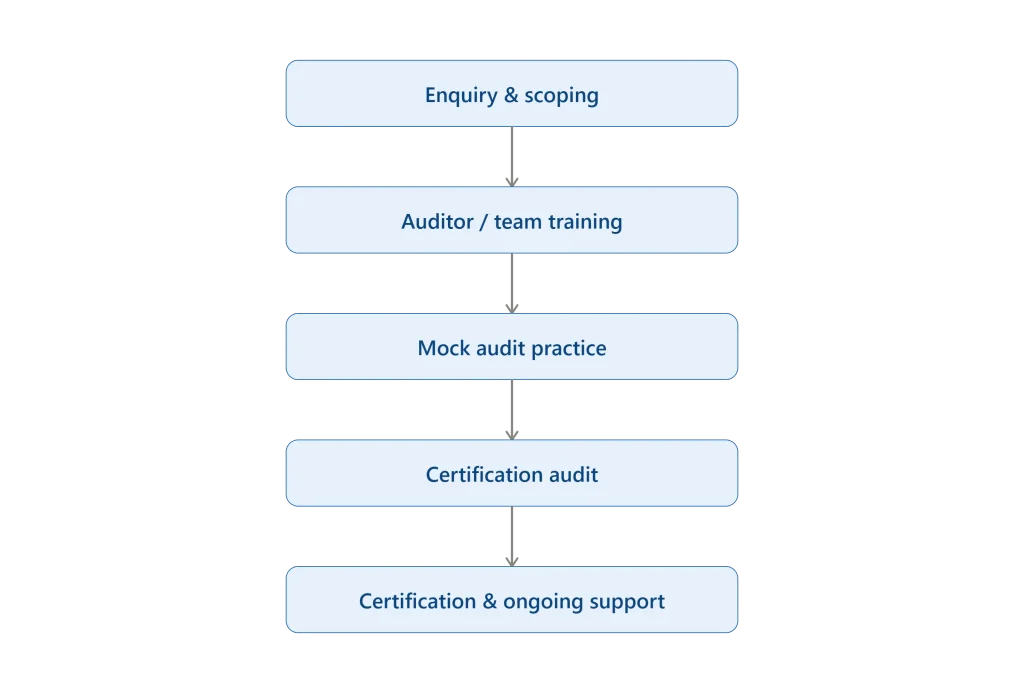
Our scope is limited: Training your team and auditing your system. Let’s take a look at the ISO 45001 certification process in action, step-by-step:
Enquiry & Scoping – We review your industry, current safety procedures and your intent of certification.
Auditor / Team Training — your team is trained on the requirements of ISO 45001 and how an actual audit is performed, not given a generic slideshow.
Practice Audit — practice an audit to know exactly what to expect when you are conducting a real audit.
Certification Audit — formal, independent audit against the ISO 45001 requirements is carried out by our team.
Certification & Ongoing Support — After successfully passing the audit, we issue certification, and remain on hand to conduct surveillance and renewal audits.
The actual benefits you’ll have from it
These are just a few of the benefits that are likely to be realized by organisations that have been ISO 45001 certified – fewer work injuries and illnesses, reduced costs associated with incidents, legal compliance, improved employer reputation, and better morale – as people can tell when safety is taken seriously rather than gathering dust on the shelf. There’s also a business bottom line aspect when you’re bidding on job opportunities that are particularly security conscious and screen vendors based on that. These gains compound over a number of years, as fewer incidents also result in less time lost due to investigation, claims and replacement of injured staff.
Why ISPL
We only provide training and audits to support your organisation to become ISO45001 certified, nothing more nothing less and that’s the point. It ensures our audits are objective, and that the outcome is meaningful to clients and regulators who do more than just look at a logo. That support encompasses auditor training to understand the requirements of ISO 45001, mock audits, formal independent audits and continued guidance for surveillance and renewal audits after certification.
Getting Started
Looking to create a real, not paper safe, workplace? We have the ability to train your team and conduct your audit from beginning to end in the ISO 45001 certification process. It’s your first certification, or your renewal, but either way, it’s easier to get a head start with your scope and paperwork when you don’t have to scramble at the last minute.
The time required for ISO 45001 certification will depend on the size of your company, the level of risk in your industry and the extent to which you have existing safety practices in place. This can also happen more quickly for a small business with an office vs. a large manufacturing business with several shifts, because there’s less to audit and train. ISO 45001 certification is valid for three years and there then follows a surveillance audit every year to ensure compliance with the standard is being applied in reality, not just in writing.
Contact Us
Looking to take the next step in ISO 45001 certification? Contact us and we’ll help you determine the right training and audit program for your organization and industry.
Contact: +91-9990477631 | info@admin
Get Expert Guidance
Fill out the form and our experts will get in touch with you.
Explore Other ISO Standards
ISO 9001Quality Management System ISO 14001
Environmental Management System ISO 45001
Occupational Health & Safety Management ISO 27001
Information Security Management ISO 22000
Food Safety Management System ISO 50001
Energy Management System ISO 17025
Laboratory Management System ISO 13485
Medical Devices Quality Management IATF 16949
Automotive Quality Management ISO 22301
Business Continuity Management
Need Help Choosing?
Talk to our ISO consultants directly — happy to guide you to the right standard for your business.
☎ +91 - 9990477631 ✉ info@isplcert.com