 admin
admin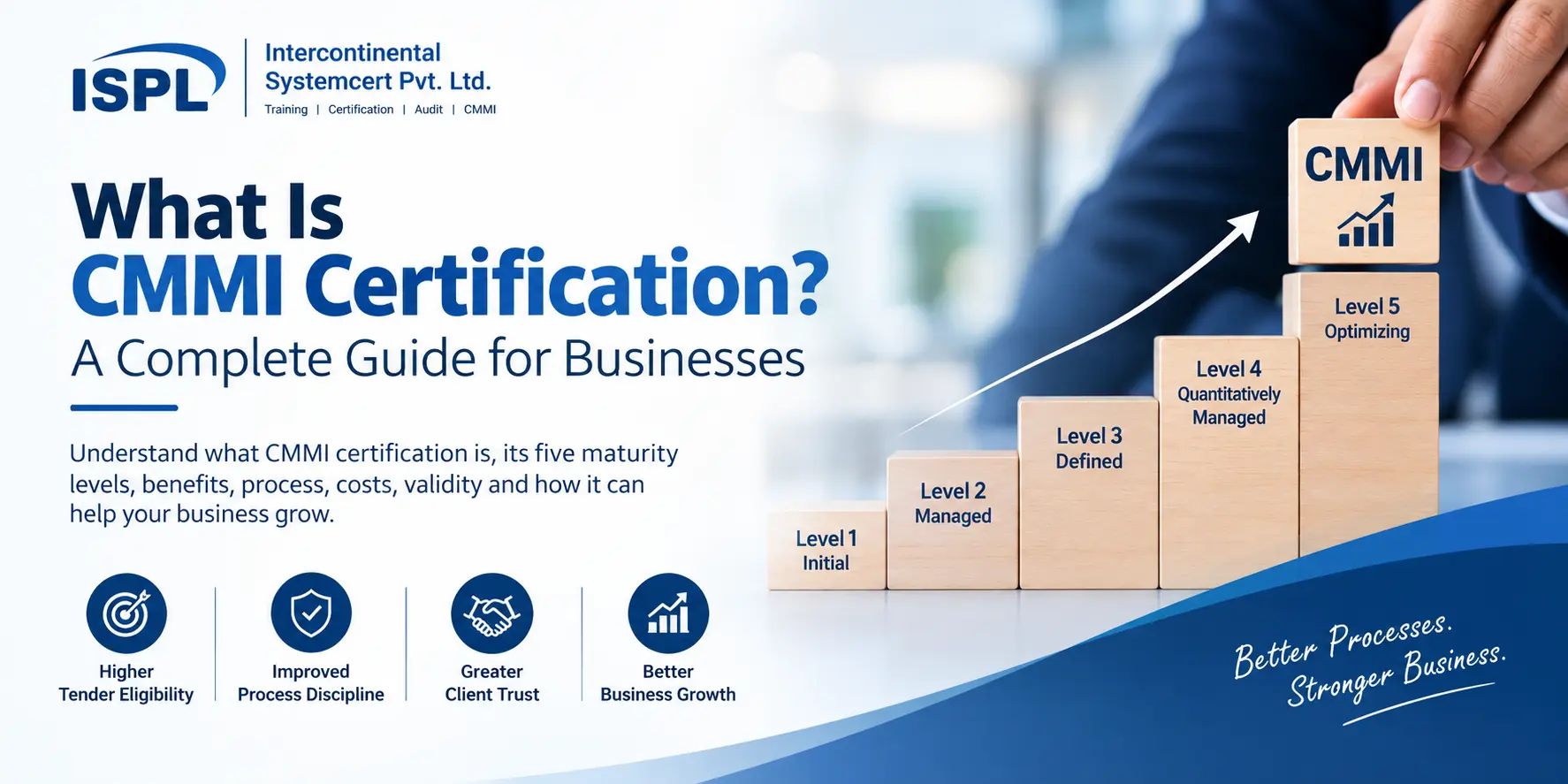
Ever lost a tender because the client asked for a maturity rating you did not have? It happens more often than people admit, especially with IT and software companies bidding for government or overseas work.
That single line in a tender document is the reason most businesses start asking: what is CMMI certification, and do we actually need it? This guide answers that in plain language, without the heavy jargon.
Table of Contents
What Is CMMI Certification, Exactly?
CMMI stands for Capability Maturity Model Integration. It was developed at Carnegie Mellon University and is now managed by ISACA.
In simple words, it is a model that checks how organised and repeatable your work processes are. Not your product. Your process.
So when someone asks what CMMI certification is, the honest answer is this. It is a formal appraisal that rates your company on a maturity scale from Level 1 to Level 5, based on how well you plan, execute, measure and improve your work.
One small technical point people get wrong. CMMI is technically an appraisal, not a certificate in the ISO sense. But the industry calls it certification, and that is how tenders word it too.
The Five Maturity Levels
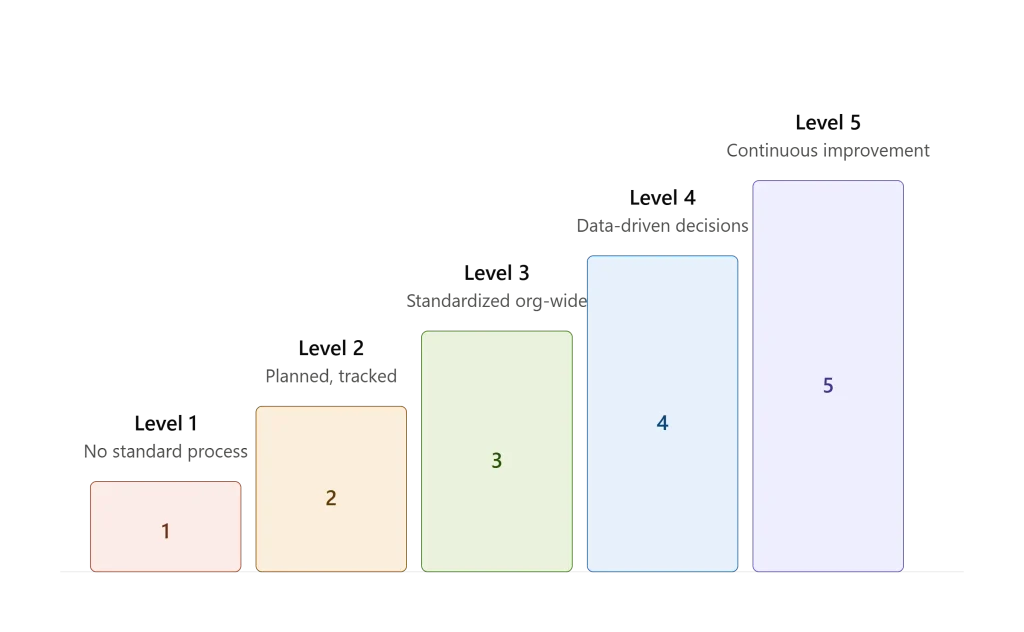
This is the core of it. Every discussion about what is CMMI certification comes back to these five levels.
This is the core of it. Every discussion about what is CMMI certification comes back to these five levels.
Level 1 – Initial. Work gets done, but mostly by individual effort. Things are unpredictable. Deadlines slip. Firefighting is normal.
Level 2 – Managed. Projects are planned and tracked. You have basic discipline. Different teams still do things differently though.
Level 3 – Defined. Now there is one standard way of working across the company. Documented, followed, and understood by everyone.
Level 4 – Quantitatively Managed. You measure performance using real numbers. Decisions come from data, not gut feeling.
Level 5 – Optimizing. Continuous improvement is built into daily work. The company fixes its own weak spots before clients notice them.
If you are still weighing what is CMMI certification worth at each level, remember this.
Who Needs CMMI Certification?
Let us skip the textbook list and talk about what actually changes.
- Tender eligibility. Many RFPs simply will not accept you without a Level 3 rating. No rating, no bid.
- Fewer project failures. Defined processes mean fewer missed deadlines and less rework.
- Better client trust. Overseas clients treat it as proof of seriousness.
- Lower cost of mistakes. Rework is expensive. Process discipline cuts it down.
- Easier scaling. New employees pick up the standard way of working instead of learning ten different styles.
- Stronger internal reporting. Once you measure, you actually know where time and money go.
One client told us their delivery delays dropped noticeably within a year of reaching Level 3. Not because of the badge. Because of the habits it forced.
That is the part most people miss when they ask what is CMMI certification useful for. The rating is the outcome. The discipline is the real gain.
How the CMMI Process Works
People imagine it is a one-day audit. It is not.
Step 1 – Understand the model. Your team needs to know what the practice areas ask for. This is where training matters.
Step 2 – Build your processes. Write down how your company plans, develops, tests and delivers. Then actually follow it.
Step 3 – Run it for a few months. Appraisers want evidence. Documents created last week will not convince anyone.
Step 4 – Internal readiness check. An internal audit shows where your evidence is thin before the real appraisal.
Step 5 – Formal appraisal. A certified Lead Appraiser reviews documents, interviews staff and checks project records.
Step 6 – Rating awarded. Your maturity level is published on the official CMMI Institute list.
Anyone asking what is CMMI certification going to cost in time should budget six to twelve months, depending on company size and current process maturity.
Validity and Cost
A CMMI appraisal rating stays valid for three years. After that you re-appraise.
Cost depends on a few things:
- Size of your company and number of projects covered
- Which level you are targeting
- How much training your team needs
Smaller firms going for Level 3 spend far less than large companies. Ask for a scope-based quote rather than a flat number.
Budget planning is a big part of deciding what is CMMI certification going to mean for your year, so get clarity on training cost and appraisal cost separately.
CMMI vs ISO 9001 — Quick Difference
People mix these two constantly.
ISO 9001 is about a quality management system. It asks whether you have quality controls in place. CMMI asks how mature and capable your processes are, and gives you a graded level for it.
ISO 9001 is pass or fail. CMMI gives you a rating from 1 to 5. Many companies hold both, because clients ask for both.
So if someone tells you ISO 9001 already answers what is CMMI certification covers, that is not accurate. They sit side by side, they do not replace each other.
Where ISPL Fits In
Understanding what is CMMI certification is one thing. Getting your team ready for the appraisal is another.
At ISPL we provide structured CMMI training for your teams and internal audit support, so your people know what the model expects and your evidence is in order before the formal appraisal. Training is delivered by experienced professionals who have worked through real appraisals, not just the theory.
If your company is preparing for a maturity rating, reach out to ISPL and we will map out a training and audit plan around your current process level.
Final Thoughts
So, what is CMMI certification in one line? It is a recognised rating of how well your organisation runs its work, and it opens doors that a good portfolio alone will not.
If tenders keep asking for it, or your overseas clients keep hinting at it, it is probably time. Start with training, build the processes properly, and the rating will follow.
Q1. Is CMMI only for software companies?
No. It started there, but service and engineering organisations use it too
Q2. Can a small company get certified?
Yes. There is no minimum employee count. Small firms often move faster because fewer processes need aligning.
Q3. How long does the appraisal itself take?
Usually five to ten working days on site, depending on scope.
Q4. Do we have to start at Level 2?
Not mandatory. Many companies go straight for Level 3, but your processes must genuinely support it.
Q5. What happens if we fail?
You do not get a lower rating by surprise. Gaps are identified during readiness checks, which is exactly why preparation matters.
Q6. Is the rating publicly visible?
Yes, appraisal results are listed publicly, which is what makes it useful in tenders.
Q7. Who inside the company should learn what is CMMI certification requires?
Project managers, QA leads and delivery heads at minimum. Without them the processes stay on paper.

admin
Part of the ISPL Cert team, helping organizations achieve ISO, CMMI and international certifications.